Choosing handmade gifts that support artisans can feel like guesswork when every label says “ethical”. Look for a clear maker story, stated payment terms and independent verification such as WFTO membership.
Handmade gifts are one corner of a wider field of alternative gift ideas worth browsing.
| Item | Value |
|---|---|
| WFTO Fair Trade Principles | 10 principles |
| Advance Mifuko pays on confirmed orders | 50% |
| Artisans Mifuko works with in rural Kenya | Hundreds |
| Age range of most Mifuko artisans (most are women) | 29-70 years |
These figures come from the World Fair Trade Organization and from Mifuko’s Fair Trade page. They can change, so check the source before you rely on them.
What makes a handmade gift support artisans?
A “handmade” label tells you how an item was made, not who benefited. A gift truly supports artisans when payment reaches the maker fairly, the work is safe, and the craft has a future.
The stakes are real. A 2021 bachelor thesis from the University of Gothenburg begins from the point that traditional craftsmanship provides a significant source of income for marginalised groups in many parts of the Global South, as its abstract puts it.
Before you buy, look for these signs:
- A named maker or producer group, not just “handmade by artisans”.
- Stated payment terms, such as advance payments or a wage method.
- Independent verification, not only the seller’s own description.
- Honest information about materials, skills and the place the item comes from.
Why independent verification matters
The World Fair Trade Organization says its 10 Fair Trade Principles specify the ways that Fair Trade Enterprises are set up and behave to ensure they put people and the planet first. It adds that it carries out verification and monitoring to ensure the principles are upheld, according to its principles page.
That is the difference between a promise and a check. A seller who writes “we pay fairly” is making a claim, while a seller held to published principles can be measured against them.
Mifuko, a maker of baskets and bags, states that as a WFTO member it is committed to following the principles. On its Fair Trade page it explains that the WFTO Guarantee System verifies compliance with the principles. Treat a membership logo as a prompt to read the seller’s own explanation, not as the end of your research.
How fair payment shows up in practice
Fair pay is easier to judge when a seller describes how it works. Mifuko says it pays a 50% advance on confirmed orders, with the rest paid when the order is completed, and that it never cancels orders or rejects deliveries, as its Fair Trade page explains.
The same page says it uses the WFTO Living Wage Ladder to support payment calculations, with the final amount agreed together with the local artisan community. It also describes working conditions: artisans can work from home and at times that suit them, for example outside the farming season or while breastfeeding.
Useful signs of fair payment to look for in any seller’s description:
- Money paid up front, so makers do not carry the cost of materials alone.
- Orders that are honoured once placed.
- A wage method that the makers help agree.
- Working arrangements that fit the maker’s life.
Craft, culture and the people behind it
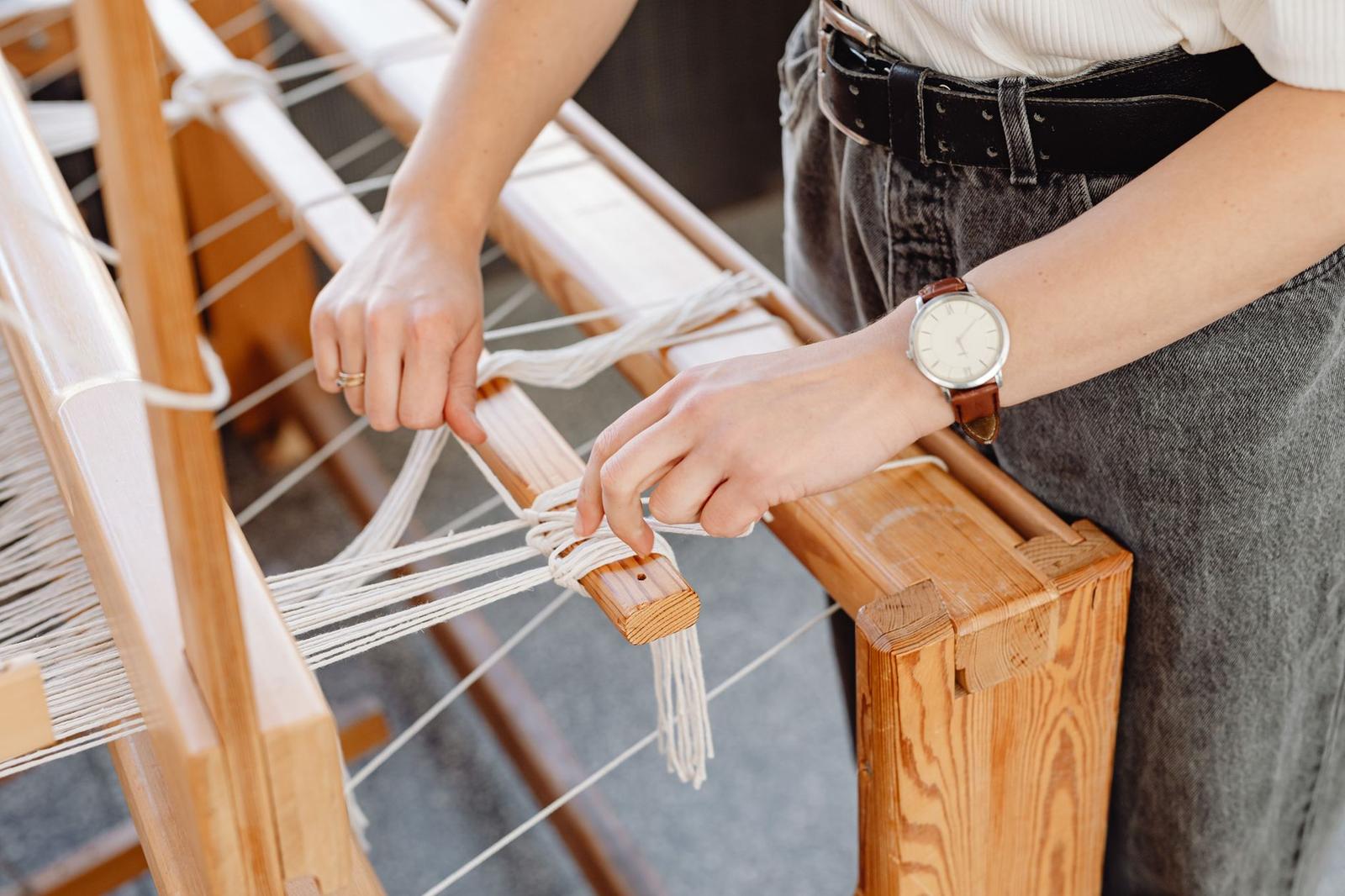
Handmade gifts carry more than a price. In the Gothenburg thesis, producer organisations from five countries in the Global South describe traditional handicraft as “having soul”, considering the fact that people are behind it, according to the thesis.
Some sellers also describe a longer-term view. Ten Thousand Villages, which says it has traded since 1946, lists fair wages in low income communities and the preservation of heritage craft and traditional skills among its aims on its website.
Mifuko likewise says it works with artisans to develop products, weaving and finishing skills, and product quality. A gift that keeps a skill in demand does more than a gift that is simply pretty.
Questions to ask before you buy
You do not need special knowledge, only a few plain questions. Work through them in order:
- Who made this, and where? A real answer names a person, a group or a region.
- How are makers paid? Look for specific terms, not just the word “fair”.
- Is there independent verification, such as WFTO membership, and can I read what it covers?
- Does the seller describe the materials and skills involved?
- Would a different type of gift reach people more directly?
If your answer to the last question is a donation, read about how to choose a charity to give to before you commit. If you prefer to meet makers and causes in person, a separate guide answers what is an alternative gift fair.
Where handmade gifts fall short
No label solves every problem. The Gothenburg thesis notes challenges in the practice of Fair Trade, seen in producers’ struggle to operate in a surrounding world dominated by a neoliberal trading system, as the abstract describes. It also says the covid-19 pandemic during the study might have affected its results.
Most seller pages, including those quoted here, describe their own practice. Read them as useful evidence, compare them across sellers, and favour the ones that give details you can check.
Frequently asked questions
Does handmade always mean fair trade?
Show answer
No. “Handmade” describes the production method, while fair trade concerns how the enterprise treats its makers. The WFTO says its principles specify how Fair Trade Enterprises are set up and behave, which a handmade label alone does not show.
What does WFTO verification cover?
Show answer
Mifuko’s Fair Trade page says the WFTO Guarantee System verifies compliance with the Fair Trade Principles and covers the entire organisation, from its business model to its operations and supply chain. Check the page itself for the wording.
How can I tell whether a price is fair?
Show answer
A price alone cannot tell you. Look instead for an explanation of how pay is set, such as Mifuko’s statement that it uses the WFTO Living Wage Ladder and agrees the final amount with the artisan community.
Do seller claims count as proof?
Show answer
They are a starting point. A seller’s own page describes its intentions and methods, so give more weight to claims that come with specific terms and independent verification.